
Traditional Korean Kimchi

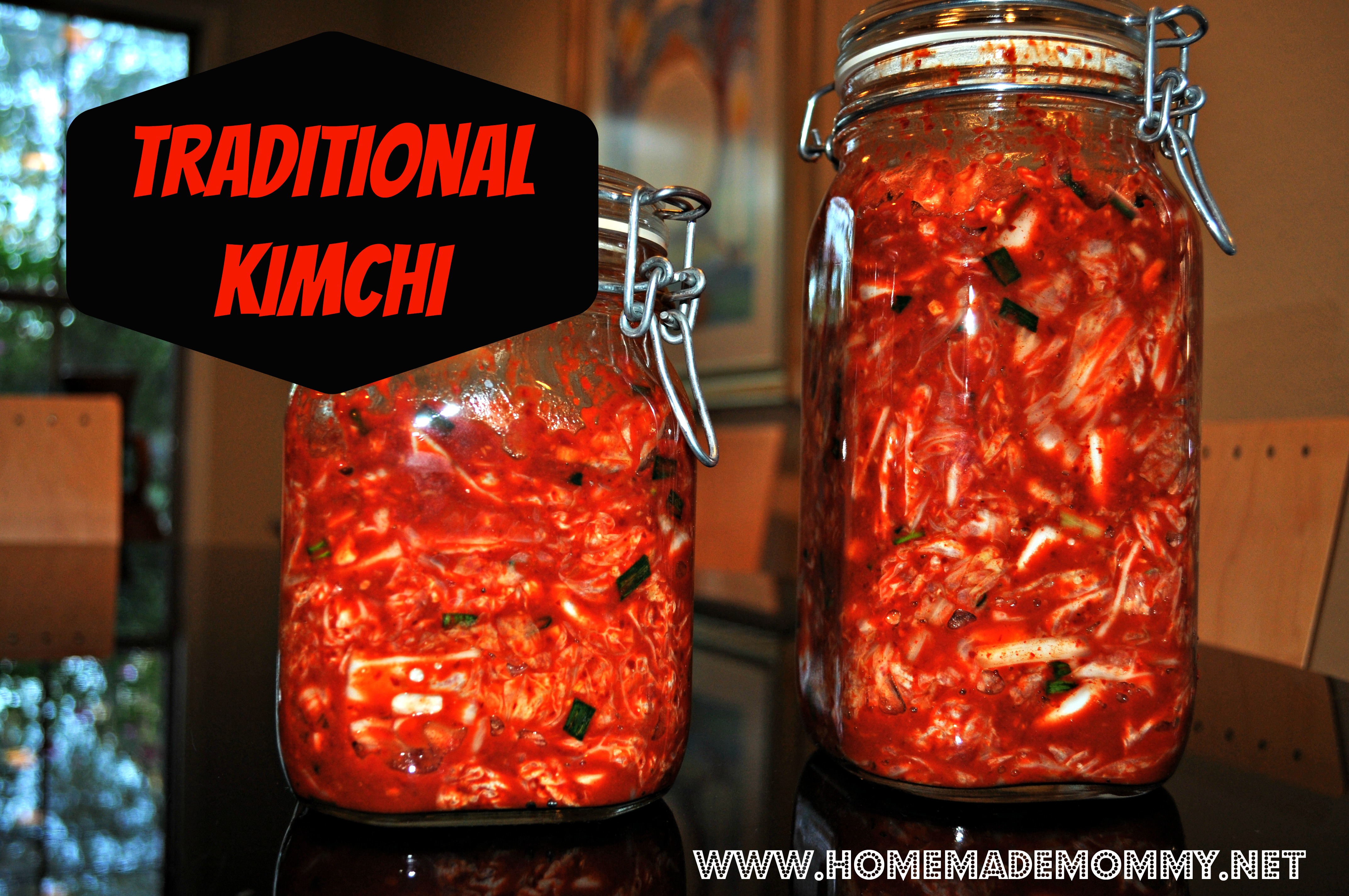
I fell in love with kimchi a number of years ago when I worked for a small start-up company with an office right in the middle of Korea-town in New York City. We frequented a restaurant for lunch that served the best bibimbap and little appetizers including kimchi. I just loved all the flavors. Last year I was finally able to travel to Korea and confirm what real traditional kimchi tasted like.
I have tried making it a few times since my trip and I have never been satisfied with the results. I found and bought the Korean ground red chile powder (gochugaru) and used that but it still wasn’t quite right. I kept seeing a recipe online and every time I read it I thought it seemed like it had too much chile powder and other spices and it also used sweet rice powder. I kept thinking how could that be right? I finally decided to try it last week and of course it was right.
I of course made some modifications to simplify it a little bit. The recipe is not grain-free but it is authentic. You can skip the rice powder if you can’t find it or avoid grains completely, but if you can include this ingredient, it is totally worth it. Please note this is NOT rice flour – it is a special kind of powder made from sweet glutinous rice. You cannot substitute rice flour. If you can’t find sweet glutinous rice powder then skip this ingredient. You can of course find other recipes online that use regular crushed red pepper or other chile spices and no rice powder – I did as well – but this one is the REAL deal so I encourage you to try it if you seriously love kimchi. Go to any Asian market and you should be able to find the red chile powder, sweet rice powder and the fish sauce. I bought all three for under 10 bucks and I have enough for a lot more batches so it was worth every penny.
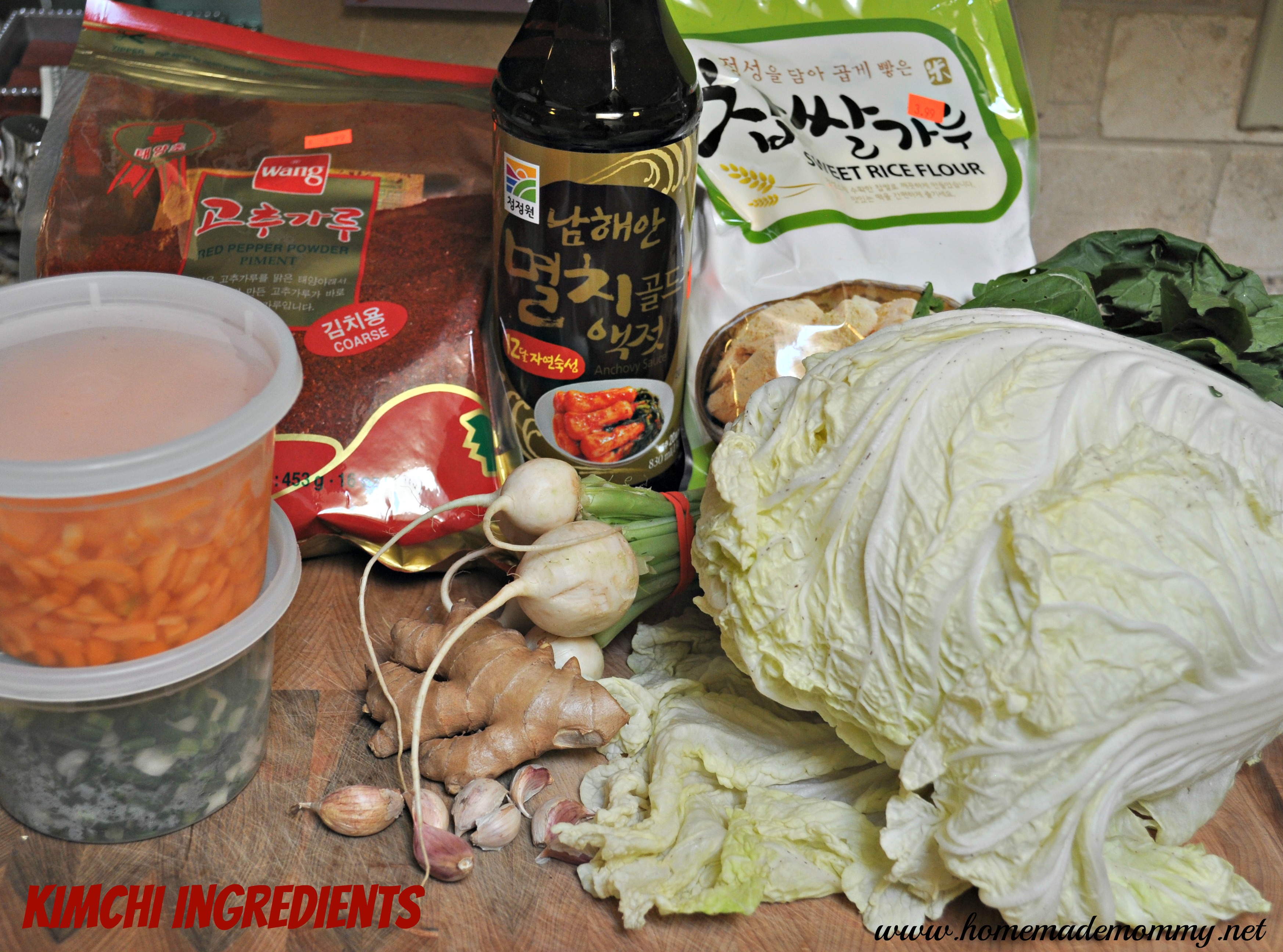
Ingredients
- 1 large Napa cabbage
- ½ cup salt
- 1 Tbsp sweet rice powder (this might be labeled glutinous rice powder as well)
- ½ cup water
- 1 cup Korean red chile powder (coarse gochugaru)
- ½ cup fish sauce (make sure the only two ingredients are anchovies and salt for a true fermented version vs. one that includes flavorings like MSG)
- 2 Tbsp whole cane sugar (yes – sugar – this helps with the unique fermentation process of kimchi)
- 1 3″ knob of fresh ginger
- 1 daikon radish (200g) or 5-6 white salad turnips (this is what I used)
- ¼ cup yellow onion, chopped
- 6 cloves garlic
- 1 cup chopped green onions
- ½ cup chopped carrots
Directions
Prepare the cabbage: Wash and remove the leaves from the core of the cabbage. Place cabbage leaves in a bowl of heavily salted water and let sit for 4-5 hours.
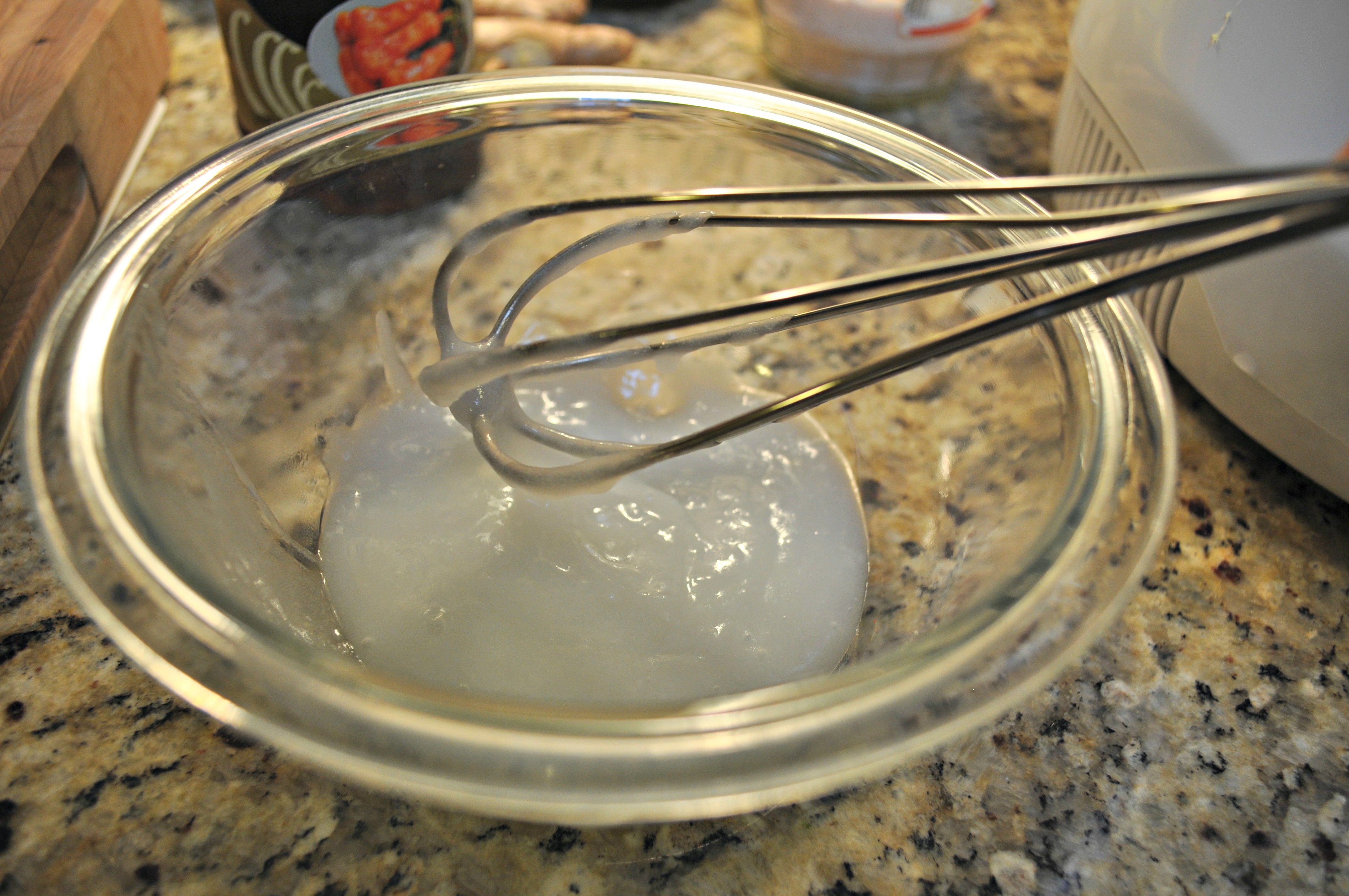
Prepare the rice powder: Add one heaping Tbsp of the glutinous rice powder to a sauce pot with ½ cup water and, whisking continuously, bring to a boil. When it turns to ‘glue’, turn off the heat and continue whisking until it cools down a bit. I removed it from the pan and put it in a bowl in the fridge to really chill out a bit while I tended to the rest of the recipe.
Prepare the vegetables: Add the ginger, daikon radish, yellow onion, garlic to a food processor and process into a thick paste.
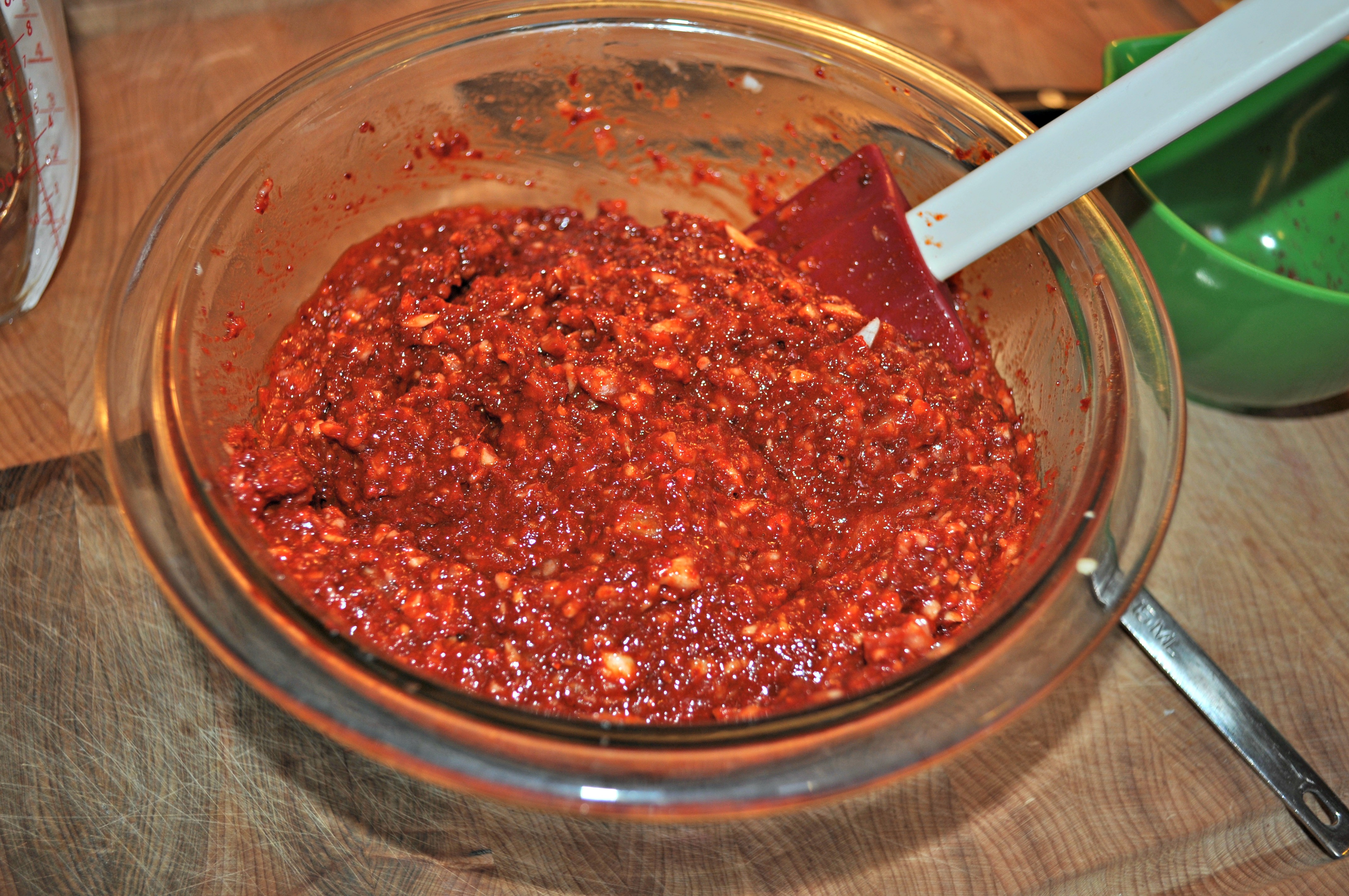
Prepare the red chile paste: Whisk together the prepared rice powder, red chile, fish sauce and sugar. Add in the processed ingredients to create a thick red chile paste.
After the cabbage has rested, rinse the leaves with water and chop into 1-2 inch pieces and set aside.
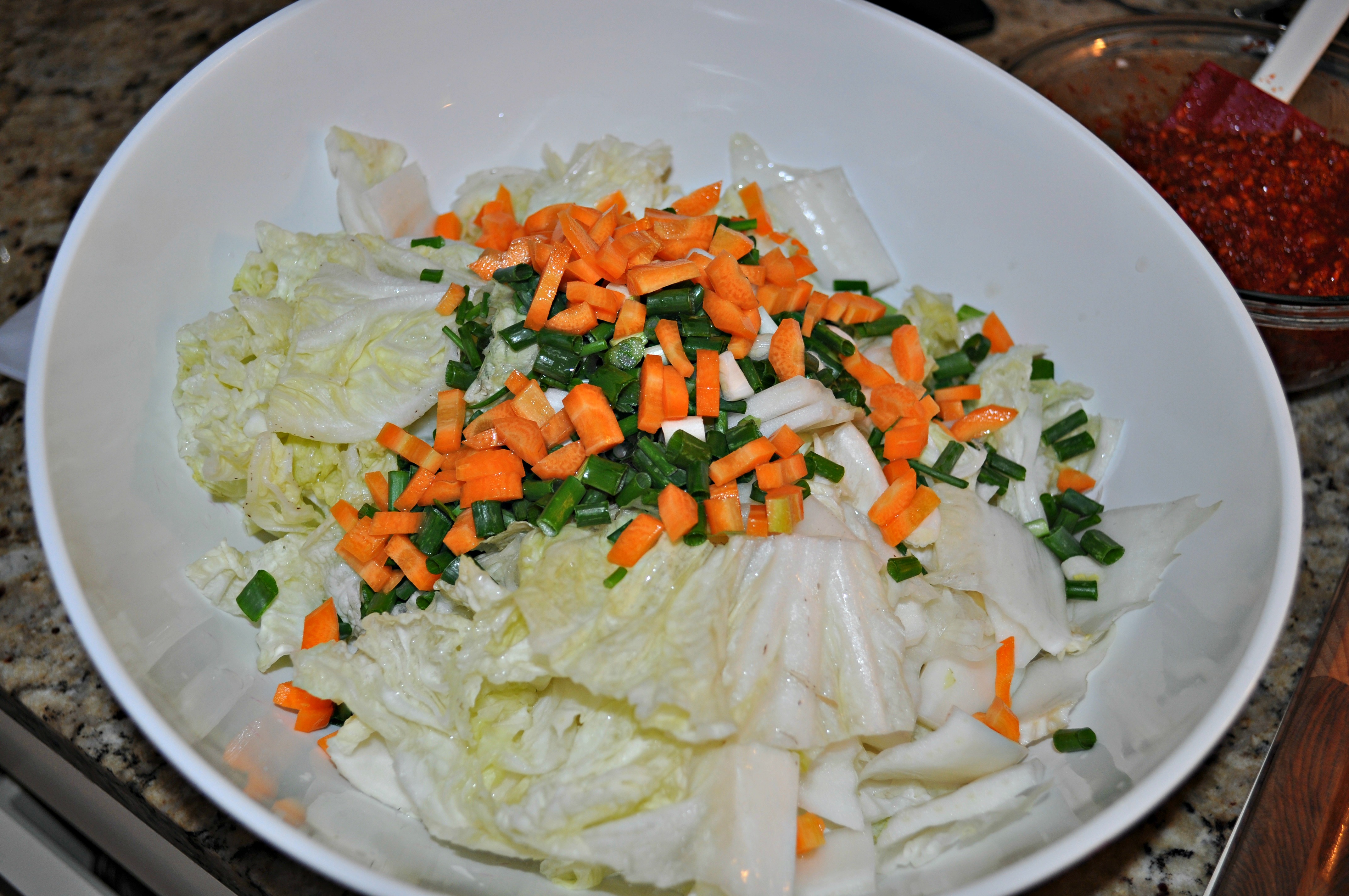
Prepare the kimchi: I did the kimchi in two batches. Place half the cabbage into a large bowl and add half of the carrots and green onions. Using gloves, add half of the red chile mixture to the cabbage, carrots and green onions and work it so that every bit of cabbage is covered with the sauce. Press down into a fermentation vessel of your choice. Repeat with the second batch.

Fermentation: After two days, check on your kimchi and pack it down again. Taste it to see how it is doing. Continue tasting and packing it down every few days. You can stop whenever you want after 3-4 days and put it into the fridge, but I like to ferment it for at least a month.
This post is featured on Real Food Wednesday, Fight Back Friday, Monday Mania, Fat Tuesday, Simple Lives Thursday
This is a great post — your recipe and your process look absolutely perfect. I live in Korea, and I adore kimchi. You’re so lucky to have access to affordable chili powder. During kimchi-making season here the prices skyrocket. Thanks for spreading the kimchi love!^^
Wow! So great to get a comment right out of the gate for this post from someone from Korea! I have been perfecting this recipe for a while! I absolutely loved my visit there and so happy you found my blog!
Thank you! I was going to try making Kimchi for the first time next week. Now I know which recipe I will follow!
Thanks Missii! Let us know how it turns out!
Great post Lindsey. We’re just getting into playing with fermenting and LOVE kimchi. Pinning so we can try this later.
Thank you Denise!
Great post! I suggest you leaving cabbage in SEA SALT water for at least 24 hours 🙂 oh and do not cut them into small pieces before fermentation, contact with steel will delay or even prevent the fermentation process!
With gloves that look like cleaning garbage…
That’s wrong, dude……
I just wash the cabbage, rinse, and salt it heavily. Then put a heavy jar/plate, etc. on top to help the salt sink in. After 2-3 hours, it is usually ready. I taste a piece to see if the salt flavor is in the cabbage or not. It needs to be in. Then drain and squeeze it hard.
I am excited to make this, what type of container would you recommend I use?
I use these –> http://amzn.to/Pix8ic
I never tried Kim chi . But my family said it is good . They tried it in Korea .
I am struggling with the sign in for leaving a comment so please excuse if this is posted twice.
I am unclear where the half cup of salt included in the ingredient list comes into play in this recipe. Is that just the salt for my cabbage soaking water? Or do I add it during one of the paste processes?
I have been making my own Pacific Northwest versions of kimchi for years but it has lacked that exact flavor of authentic Korean kimchi. I usually include burdock root plus TONS of garlic & ginger, plus I end up using one of the cabbage varieties that is more readily available from my local organic farmers. I suspect the addition of sweet rice powder, fish sauce and sugar will give it that certain je ne sais quoi.
But what about that salt? I have a batch of cabbage soaking right now & I’ve cross posted this question on your Facebook page, hoping I’ll find out before I pack this stuff in my fermentation jar tonight!
The salt is for the water you soak the cabbage in. It is not for the paste. It is really good. Let me know how it goes!
Made with my napa’s from the garden, it was a fabulous project. Used salmon roe cured with salt fresh from the Copper River (we catch our own fish and save some of the roe). I noticed many kimchee recipes call for some kind of pickled shrimp. Can’t wait to try it!
I really want to try this because ilove kimchi but don’t have much experience with pickling. After its one and in a jar like the one you used, how do you keep it after that? And for how long?
Hi Lindsey, I love your blog and make several of your recipes, and was so excited to try my hand at homemade kimchi–my boyfriend was stationed in Korea for over a year and we absolutely love the cuisine. I have to say though, the amount of gochugaru used in this recipe has turned mine inedible. We love spicy foods but this ended up being way too hot. I even cutup 4 more medium sized cabbages and worked them into the mix after it’d been sitting for two weeks and that didn’t do much to dilute the spiciness at all. At this point I think I’m just going to have to throw it out :\, unless you have any ideas to salvage it?
I wonder if the one you purchased was spicier than the one I did? I really love spicy food so it is possible it is spiced to my liking… Sorry it didn’t work out for you.
Thank you for the recipe and your attention to detail in searching for an authentic method to prepare kimchi. I prepare my kimchi without the fish sauce, shrimp or rice flour. I enjoy it but I also know it is not authentic. Maybe now I will follow your recipe to see how I like the flavor of the true Korean kimchi.
Let us know how it goes! I didn’t add shrimp because I am allergic… 🙂 Enjoy!
Thank you so much for the recipe!! I am wondering how to know when to stop? I like the idea of fermenting for a longer period of time, but not sure how to know when to quit? What does the flavor do when you ferment longer?
Hi Lindsey,
I came across your posting after searching for some kimchi powder uses. Our dehydrated kimchi powder is by far the BEST and most authentic on the market. It is incredibly similar to the taste of authentic Kimchi and would love to send you out a sample, (if you like it all we ask is that you review our kimchi powder in a blog post, or even list it as an update in this one). If you’re interested please drop us a line we look forward to hearing from you
Warm Regards,
Chef Cherie