
Why I Love Kefir and What Are Kefir Grains?

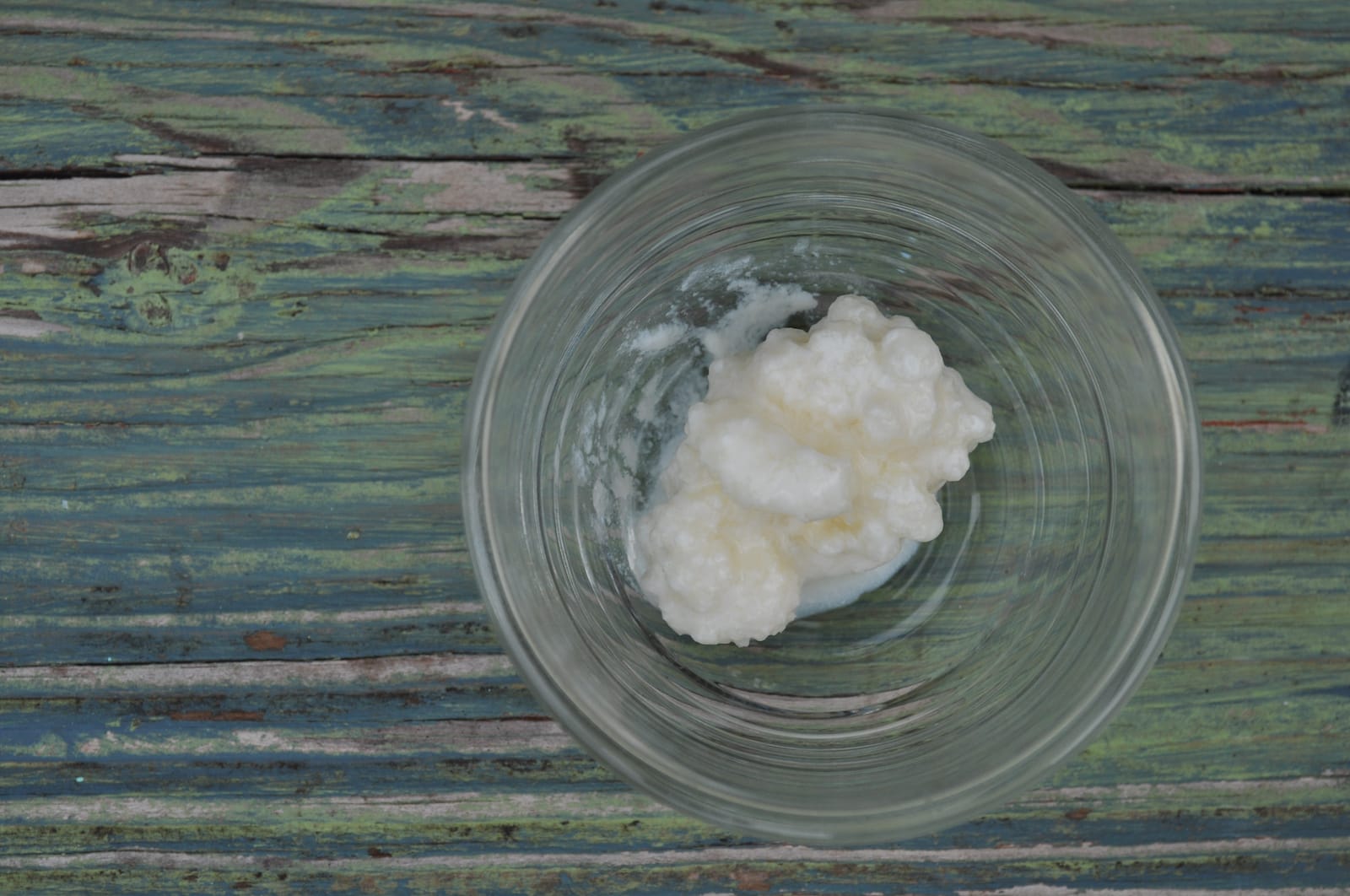 This is the second installment in my What are Fermented Foods? series where I explain why I love kefir and what are kefir grains. I started making my own kefir from live kefir grains about 2 months ago after many false starts. I tried drinking kefir back when I started eating an unprocessed, traditionally prepared real food diet about a year ago and it didn’t sit well with me. So I took a probiotic and stuck with foods like sauerkraut and fermented condiments like mayo. I figured I wasn’t reacting well to the dairy in the kefir so recently I heard you could also make kefir from coconut milk. I was able to score some grains from a friend and also got to talk to someone about introducing kefir slowly to your body. Apparently kefir is pretty potent and while it works on healing your body, it can cause a number of symptoms for a few weeks – things like headaches, rashes and digestive issues. Once I realized this I was able to make the switch from coconut milk kefir to cow milk kefir just fine. In this post I will describe what are kefir grains, the benefits of kefir and how to start slowly with kefir and work your way up.
What are Kefir Grains?
To understand what kefir is we must first understand the grains used to make kefir. According to Real Food Fermentation: Preserving Whole Fresh Food with Live Cultures in Your Home Kitchen by Alex Lewin, ‘Kefir grains are combinations of yeasts and bacteria living on a substrate made up of a variety of dairy components.’ These live kefir grains look a little bit like cauliflower florets and are somewhat gelatinous in texture. My favorite fact about kefir grains is that live kefir grains cannot be made or manufactured (yay! a *real* real food!). No other milk culture (yogurt, Creme Fraiche, etc.) forms grains so it is very unique! You can purchase kefir grains or look for someone making kefir nearby who might be able to share some. I often look to my local Weston A Price chapter for this. There is also a group on Facebook that shares kefir grains with people looking for them.
The exact details of their origin is not known although there are many stories ranging from the grains being the actual manna from heaven during the Israelites wandering in the desert for 40 years or a gift from Allah to the Prophet Muhammed. In any event, the grains were closely guarded secrets because of their health giving properties until the early twentieth century when a Russian spy was able to get some and then they quickly proliferated in Russia and Eastern Europe and now throughout the world.
What is Kefir and what are the benefits to drinking it?
Kefir is the drink made from the kefir grains and it has the consistency of a drinkable yogurt but is much more tart and is actually effervescent. Upon trying kefir the first time, my 3 year old daughter commented that it tasted like a milk soda! Kefir grains consume the lactose during the culturing process so lactose intolerant folks rejoice – you can apparently drink kefir. The neat thing about kefir is that it is pretty versatile – you can drink it plain or add it to a smoothie or even drain the ‘whey’ from it to make kefir cheese (like cream cheese) to use in dips like ranch dressing, etc.
Way Better Than Yogurt
Kefir made from live kefir grains has 35 different strains of beneficial bacteria and yeasts. Kefir isn’t at all like yogurt in that kefir actually colonizes our digestive tracts with this beneficial bacteria and yeast. Yogurt and many other so called probiotic foods on the market today actually only provide prebiotics or simply – they provide food for the good bacteria that live in the intestinal tract. Laboratory grown yogurt has only 1 or maybe as high as 5 strains of beneficial bacteria and laboratory grown kefir for manufactured products has only 10 strains. Commercially made kefir sold in the stores is not fermented long enough. In addition the pasteurization process after fermentation kills the probiotic microbes. So my next statement only applies if you would like to make your own – Start SLOWLY. Just a spoonful a day for the first two weeks should be enough to slowly introduce your body to this magical substance. I had some digestive issues the first two weeks (I felt like I had a brick in my stomach) and my daughter got a rash. Some people call this period ‘die off’ because it is the kefir killing off bad substances and this shows up in different ways for different people. After a few weeks of this, I could actually tell when I was ready for more because I suddenly wanted more kefir. I am now able to drink almost 2 cups a day!
Kefir boosts our immune systems by keeping healthy bacteria in our digestive tract (and remember 80% of our immune system is in our digestive track!). The fermenting bacteria produce lactic acid which heals and soothes the gut lining. Kefir is rich in vitamin A, B2, B12, D, K, calcium, magnesium, phosphorus, and typtophan. It has anti tumor properties, prevents disease, increases digestibility and it controls toxins.
How do I make kefir?
Making kefir is a pretty simple process – you do not need to maintain a constant temperature like with yogurt.
Check out my Periscope tutorial here!
You basically add the grains to milk, set it in a pantry or countertop for 18-24 hours and voila! Kefir! Then you simply strain out the grains and put the finished kefir in the fridge. You then reuse the grains again (you don’t need to rinse them and if you do rinse them make sure not to rinse with chlorinated water – it will kill the kefir!) in a new batch of milk. When you need to slow down the process (read: you are leaving town for a week), you just put the grains in milk and put them in your fridge while you are gone. With each subsequent batch your kefir grains will grow and you can share them with friends and family. I absolutely love that part – what a way to build a community of healthy people.
Watch my You Tube video on how to make kefir here
Click here to buy kefir grains.
Kefir Benefits from Around the Web
- Kefir Q&A
- Learning to Make Milk Kefir
- A Simple Guide to Making KefirBenefits of Coconut Water Kefir
- Kefir: Manna from Heaven
- 5 Reasons to Make Kefir
- Why Homemade Kefir is Better Than Store Bought
- 3 Reasons to Stop Taking Probiotics
- What is Kefir? How Do I Make It?
Between batches, where do you store the grains?
You just do one batch after the other. If you want to stop for a day or a few days – just put the grains in milk in the fridge and take out when you want to start up again. So basically it is just a continuous cycle – every 18-24 hours you start a new batch with the same grains. If you want to stop for a longer period of time you can take the grains out and rinse them in non-chlorinated water and then let them air dry completely and then freeze them in a plastic bag or jar.
My kefir grains are in the fridge right now. Can I just start a batch right now, or do I need to let them sit at room temperature for X amount of time? Thanks.
I would run a small batch through. Then I would toss that batch and then make another and that would be my first batch I would drink!
When i've strained my kefir and have the strained grains.. i put them in a small glass jar, add milk just to cove 'em, put on a lid and keep in the fridge until I'm ready to make more kefir 😉
Does it taste like chalk? Can you put it in a smoothie for the same benefit? I'd love to get some grains from you and give it a go…my immune system needs a major overhaul!
I drink it every single day in my smoothie! Just ordered a new CASE of it today!
It doesn’t taste like chalk! 😉 It actually tastes quite delicious! Yes–add it to smoothies, ice cream, salad dressings, you name it! I am out of extra grains this time but could find you some if you really want to start…let me know.
Hey Lindsey, I really want to start but have heard so many mixed reviews about buying them online and I did look on Craig’s List where people are selling them but I wonder if it is similar to say making your own sourdough starter in that it draws bacteria from the surrounding air? While I am not necessarily a germaphobe, I don’t know how clean the environment is that they are coming from…should I be concerned about this? I would LOVE some of yours, or maybe you can recommend someone from Washington
State?
I tried kefir today for the first time. Definitely does not taste like chalk. It is a bit on the sour/tart side of yogurt flavor. I mixed mine with strawberry jam at the suggestion of the friend giving me the grains, just to sweeten up the flavor until I get used to it.
I’ve making making my Kefir for 6 months now and love it. For my milk kefir I us coconut milk, soy almond or milk. I rotate between them and mix them all together in a glass jar for using for smoothies or baking. I’ve used it for sauces in place of milk, yea that didn’t work out so well. No One in the family cared for dinner that night! lol Another Kefir option is a water kefir that is absolutely yummy in my book! I think it taste alot better than the milk kefir. I love the taste of my water kefir, I will drink a 2 qt pitcher everyday.
What is water kefir? I just fermented some milk much too quickly, it separated, and because I have only just started, I got in a panic and didnt know if I could differentiate between the ‘cottage cheese’ type lumps and the kefir grains, someone told me to look for them with my fingers,I found them, and then washed them in spring water. The water seemed so nice and I thought it must have some remains of the grains in it, so I decided to leave it and see if I can ‘grow’ more grains in it, will they grow in water, or only in milk?
Water kefir grains are different than milk kefir grains. Milk kefir grains feed on the lactose in milk. You can’t grow milk kefir grains in water. You also can’t grow water kefir grains in plain water – they feed on sugar.
so how do I get the grains – can I order them online – dry?
check your local weston price chapter. people usually are giving them away! there is also a Fermentation group on FB – ask to join and then post if you need some. In a month I should have some more and can try to send you some!
Hi Misha/Lindsey, I use Kefir for 3 years right now. In the beginning I made kefir using the grains, however I found it much easier to make Kefir using dried Kefir starter cultures. I think the advantage of these starter cultures is that kefir taste exactly the same, I enjoy the same benefits of using the grains and the most important advantage for me is that I can start with fresh cultures every 5 weeks. I live in Germany, 3 years ago I orderd my cultures via the internet in the Netherlands. The last time I orderd my Kefir starter cultures via a company settled in the United Kingdom, they are called The Kefir Company. I’m very satisfied with their product and service. For the one that are interested you can find them on the following website: http://www.buy-kefir.co.uk.
@Lindsey: Did you already tried Kefir recipse?
I have never tried dried grains – only the fresh – thanks for the tips!
I’ve used the freeze dried cultures, which are fine in a pinch, but they are not as robust as the grains. They need a lot more babying and can be propagated only if you’re lucky (as the earlier commenter said, restarting every 5 weeks).
I’ll stick with my grains thank you very much. The freeze dried starter is a nice way to try out kefir making, but I wouldn’t recommend it in general.
my mom kept a kefir “cauliflower” that survived well for years, Then (i don’t know what happened) it started to shrink until it finally died. I can only suspect it was the use of the pasteurised, homogenized milk.
I would use raw mik if i started to make this again.
i was also wondering, maybe someone knows, are kefir grains aka tibetan mushrooms?
lastly, i’d like to share a tip: my mom was keeping the kefir cauliflorette in a breathable synthetic homemade pouch.
u dont have to use raw milk but never use fat free or 1% milk. Cultures die off because of different reasons.
I just received my first grains this weekend. Unfortunately, I used 1% milk before reading this post. The kefir turned out fine till I placed it in the fridge after straining it. Was it because I used 1% milk? I’m trying it now with Almond milk because I”m lactose intolerant. What types of milk are safe for my kefir grains? thanks
Hi Josie – yay for making your first batch! Yes–whole milk would be preferable…the grains need fat to survive.
“The kefir turned out fine till I placed it in the fridge after straining it. Was it because I used 1% milk?” – can you please elaborate? What happened to the kefir? Are the grains still alive?
“I’m trying it now with Almond milk because I”m lactose intolerant. What types of milk are safe for my kefir grains?” – Kefir grains cannot live in almond milk. You can use coconut milk but read my post explaining how to do it and understand you need to refresh them in dairy milk every once in a while. http://www.homemademommy.net/2013/02/coconut-milk-kefir.html
Also have you tried raw milk? Many folks who are lactose intolerant can tolerate raw milk because it contains lactase in it.
http://www.homemademommy.net/2013/06/got-real-milk.html
I have used everything from nonfat to whole milk that is just the regular pasteurized milk from the store for the past 4 months and my kefir grains multiply like crazy. My kefir grains don’t seem to mind the fat content or lack of it at all. They are very prolific.
one more question please (dear Lindsey, since i came here again, here’s a link to one of my favourite videos! – http://www.youtube.com/watch?v=oiSkrxINkHA&list=PL2894BEB401175936&index=7&feature=plpp_video )
so, back to my initial q.: what is water kefir? gracias
If kefir grains cannot be made or manufactured, then is it an animal that is born and grows? Ok, we know an animal grows in its mothers womb so where does kefir grains grow in? Where does it come from originally? Is it suitable for a lacto-vegatarian?
It is lacto-vegetarian. It is a symbiotic colony of yeasts and bacteria!
But that does not answer my question: Where does kefir grains come from? I know it is a colony of yeasts and bacteria but from where it comes from? If something can’t be manufactured then it would either be a plant that grows in soil or a living being like human or animal. So which of these two categories does kefir grains fall into? I want a clear answer. I’m tired of searching the internet but no site can give any clear information about the grains! Surprising!
Way back a long time ago there was a “first batch” of kefir grains. Itt grows and colonizes bacteria. It came from God in the beginning, if you want to get into the nitty gritty. All kefir grains are separated from a previous batch. Not that Kefir grains have a geneology, but they all trace back to the same kefir in the beginning. It cannot be developed. This particular combination of bacteria and yeast cannot be found somewhere naturally. It derives from itself.
The concept that ‘all living things are either plants or animals’ dates from the 1700s and is now understood to be completely incorrect. Bacteria and fungi (such as yeasts and mushrooms) are completely separate categories of living things that are exist alongside plants and animals. If you eat bread, you eat yeast. If you eat cheese, you eat bacteria. So kefir is completely suitable for a lacto-vegetarian.
Here is a diagram from wikipedia showing the various scientific classifications used by scientists over time:
http://en.wikipedia.org/wiki/Kingdom_%28biology%29#Summary
I know the good bacteria is great for candida, but is the yeast in kefir okay, or would it complicate the situation?
Wow! I’ve never heard of Kefir so Thanks for explaining how to grow it. Joan i Ontario Canada.
Lidsay, you mentioned there is a fermentaion group on facebook.
What is the name of the group you are talking about? There seems to be a few, but im not sure which one you are referring to.
thanks!
I just bought mine off of Amazon. It came in a tiny package yesterday and it said it would take about a week to recover and before i start getting real kefir. Its from Lifetime Kefir and it was only $2.99 for 1 tsp of grains. There are more sellers on Amazon. I used to have Kefir Grains long time ago. They are awesome
I own 200 ackers of coconut trees in thr Philippine. I’m ratical in perma farming keifer is one of the things l have been looking fot.
Don’t cook so this wonderful concocsion never crossed my desk or laptop.
Mix with coconut milk l now have a usr for all thst discarded water
Thst is best part of coconut.
I do splina and corilla and grow duck weed. We also make kabusha tea and
Spoggies this is new weapon againest poor health due to poverty.
Thank you
I don’t care who knows Dr Danny Martin
時計 ランキング メンズ
I just started making my own kefir a few months ago. I am loving it!!
I am so Happy to say that I have arranged with a local Farm to barter my ferments and preserves for Fresh Organic Cow Milk!
My kids grew up on fermented Dairy Products from our Dairy Goats. I don’t use store bought milk……so…..I don’t, haven’t been using milk. That is all about to change!
If you have any questions on farm to table eating please feel free to ask. It’s all about the sharing.
I feel like Grammy to so many younger folks coming to the Real World of Food!
Bless you, keep up the Good Work! ….Peace
I’m in Victoria Australia and started growing Kefir Grains about 3 weeks ago, and now have enough to sell some if anyone is nearby me.
I paid $16 (plus postage)for my starter grains 3 weeks ago and they have now more than doubled in size and volume.
I’m in West Gippsland so anyone nearby can pickup.
freequest at iprimus.com.au
I also have Water Kefir Grains
Hi Lindsey, I’m desperately looking for some kefir grains to make my own kefir. I don’t really want to use the dried grains and I tried contacting Weston A price. Do you think you can help me with this? Thanks so much!
Yes–I would check to see if you have a local Weston A Price chapter. There should be folks who have kefir locally that can share them! There is also this group on FB if you want to join and see if anyone has any to share with you: https://www.facebook.com/groups/181445115312844/
I am a beginner so would like to know can I use Almond Milk instead of cow milk?
No you cannot use Almond Milk. But you can use coconut milk!
Does store bought kefir have the same benefits of homemade kefir ?
I address this above (I thought) – no – homemade is better. It has far more strains of beneficial bacteria.
I know raw, unpasteurized/unhomogenized organic milk would be ideal and raw milk is hard to get. Can I use regular whole milk? The brand I buy does claim to get milk from cows not given the growth hormone. And when you say that coconut milk can be used, does that mean the refridgerated milk in the carton? Sweetened, unsweetened or does it matter?
You can use regular whole milk but just know your grains may not replicate as readily.
Kefir grains feed on lactose so you have to use whatever has lactose in it, raw milk being the best. Also, be careful of what you use to sweeten it as many forms of sugar can destroy the bacteria you are trying to grow.
Hello I live in Greece and I offer milk kefir grains to anyone who is willing to pay just the cost of express shipping.
I use kefir in cooking and baking. I was just wondering if the heat harms the bacteria? It’s wonderful in some of my recipes.
I have the same question. I read that milk kefir cannot be heated more than a 100 degrees otherwise the bacteria dies. So my question is, why use it in pancakes and other recipes? Does some of the benefits stay even heated up?
You only need one spoonful to get loads of benefits. Sometimes you have a lot of kefir…more than you can drink. I assume bake with it. Yes–baking kills the benefit but frankly who cares? Drink a glass while you are baking – you will get the benefit! 🙂
If it tastes good then keep doing it! It adds a lovely flavor doesn’t it? 🙂
Hi, I started to culture and eat vegies, then added raw apple cider vinegar in water twice a day to help digestion. Started to get a full on histamine type itchy skin, swollen mouth, etc. So I have quit now for 4 days and things are better. I have my first batch of kefir going now and my question is how bad was your daughters rash and how long did it last? I want badly to try the kefir but am a bit hesitant.
Thanks!
Just start small with a tsp a day and see how you do. My daughter’s rash didn’t last long.
i’ve been making kefir for just a couple weeks now and i’m wondering if you could help with this: i’m wanting to make this fermented hot sauce and it calls for a starter culture-leftover whey from making kefir-are the “grains” the leftover whey?it calls for 1/4 cup fresh whey or veg. starter culture dissolved in water. i’m new to the process so any insight would be greatly appreciated! here’s the hot sauce recipe: http://nourishedkitchen.com/fermented-hot-chili-sauce-recipe/
thank you!!
The grains are not the leftover whey. You would need to strain the kefir through a cheesecloth or butter muslin and the liquid that strains out is the kefir whey. You will be left with kefir cheese which is like cream cheese. Here is a post about how to do that: http://www.homemademommy.net/2012/11/how-to-make-kefir-cheese-and-whey.html
I make kefir. I got my grains off Amazon from fusion Tea and it came with a recipe book to help you begin. I live in the south so we usually use buttermilk when frying chicken. Well I use kefir. I use it in smoothies, make kefir cream cheese and add seasons for dips. It is tangy and it took me a few batches to learn how to change the taste of it. The grains eat the milk sugar. So it may even be ok for some lactose intolerant. The grains are alive. They eat the sugar in the milk of each batch and grow like weeds. 🙂
I start taking Kefir using Kefir grains, I take 1 cup a day, I eat the little alone remaining Kefir grains in the strainer :). But 1 week later, I had severe gut pain, flu like symptoms and mild fever. Is this die-off symptoms ? So drinking it and It took me 4 days to feel my gut back normal. Maybe I should restart slowly, and stop eating the grains lol
Hi! I recently went to whole foods AND Natural Grogers and starter kefir grains were 25 bucks!! Can you send me some of your strain?!
Hey Michelle,
I guess it’s inevitable that people will sell the grains, but ancient lore suggests that the grains lose some of their magical powers if they are sold, and not given away. Well, that’s a nice idea, anyway.
We were able to find people in our local community who were able to get us started in sharing grains. Once ours have grown, we’ve passed them along. Maybe suggest looking on an online classifieds site to see if you can find someone giving away for free (good karma!).
By the way, here’s a recent post we published about kefir, its history and some of the science emerging about it.
http://www.healthygutbugs.com/kefir-wonder-beverage-ancient-world/
Hi. I have no issues with dairy or yogurt, and store bought kefir is just fine.I have recently started making my own kefir at home, but notice that even a small teaspoon makes me feel bloated compared to the commercial stuff. Wondering of that is just a beginning effect?
thanks
Kefir from the store normally has only 12 or so active strains of bacteria. The stuff you make from live kefir grains can have over 30 different strains.
When people start taking kefir, they can have a period where there bodies are experiencing d”die off”. This is when the good bacterias in kefir enter into your gut and start killing off the bad bacteria. It can cause all sorts of different reactions, from flu-like symptoms to stomach upset.
It is best to start slow and wait until your body adjusts. If you feel like you are having an allergic reaction, you should stop.
Hi, does any body be kind of given away a bit of kefir grains, i’m in the Washington dc area.
thanks.
[email protected]
my kefir grains have started to grow and multiply! i started with about 1 tsp and have probably 4 tsp (over 1 Tbsp.) i want to share with a friend locally. what is the best way to pass it on? should i measure out 1 tsp (more or less?) and give it to her in fresh milk? best to pass it on just after straining?
I just give out grains like crazy. One tbsp (ish) is perfect. I do put it in milk but have also mailed friends some in a zip loc bag with great success.
Hi,
I have been buying Kefir from the supermarket. Can I obtain Kefir grains from that pot by straining ?
Unfortunately not. You need to obtain some grains.
I just started making Kefir this past week! I am so excited about it! I had been making yogurt for a while, but Kefir seems like the better option as far as probiotics go. After the die off period did you find that eating probiotic foods improved your family’s overall health? If so, in what ways? I love the video, short and sweet! 🙂
My mother in law recently shared kefir grains with me and my family loves them! I’ve been buying kefir from the store for years, but I love the almost fizzy quality of the homemade stuff. So far I’ve blended it with bananas, strawberries, and raspberries. I’ve also added it to my green smoothies. It’s way yummy! I found your blog because I was curious how to slow it down, especially in the summer. I’m also glad that you can make it with coconut milk. I have clients who can’t do cow dairy at all. I’m assuming that you need to find coconut milk that doesn’t have emulsifiers or additives, correct?
Thanks for the informative post!